Manual.ly Logo

JBL Aquaristic ProAquaTest Lab Manual

0,0 · 0 Evaluări

Manual PDF · 65 pagini

Română

M: QW-35-FL
pagină

/ 65

Loading...
20bbaef5bdec311f8d8e156c4e1fe9d6e449 page 9
16 17
deciency. Iron and some other trace elements are only sta-
ble in water for a limited time, even if they are bound to so-
called chelators, as is usual in modern fertilisers. In addition
any tap water added is usually iron-free. Therefore, the iron
content needs to be monitored regularly with this test and re-
plenished if necessary. Cncentrations as low as 0.1–0.2 mg/l
are sufcient for good plant growth. In very densely planted
aquariums, values of up to 0.6 mg/l can also be useful. In
marine water, values of up to 0.05 mg/l are recommended.
Procedure:
1. Rinse both test vials several times with the water to be
tested.
2. Use the enclosed syringe to ll each of the test vials with
5 ml of sample water.
3. Add 5 drops of Fe reagent to one of the two test vials and
mix by swirling. Allow to stand for 10 minutes until the
colour has developed completely.
4. Place both test vials in the grey comparator block: Place
the vial with added reagent at the smooth end and the
vial with untreated sample water (blank sample) at the
notched end of the comparator block.
5. Place the comparator block with the two test vials on the
colour chart in such a way that the notch points to the
values and move it on the colour chart until the colour of
the sample mixed with reagents corresponds as closely
as possible to the colour under the blank sample.
6. Read the iron content in the notch of the comparator.
Note:If you decide to use the JBL PRO AQUATEST NH
4
at
the same time, make sure you don’t mix up the measuring
vessels of either set. Traces of the JBL PRO AQUATEST
NH
4
left inside the measuring vessel may result in too high
readings in the iron test.
Correcting deviating values:
Too low: Fertilise with ferrous fertilisers from the JBL ferti-
liser range (e.g. JBL Ferropol).
Too high: Carry out the corresponding partial water change.
JBL PRO AQUATEST K
Features: JBL PRO AQUATEST K is an easy-to-use turbid-
ity test for the routine monitoring of the potassium content in
fresh and marine water.
Why test? Potassium is one of the macroelements which is
very effectively absorbed within a few hours and temporarily
stored by plants in fresh water. Growing plants require more
potassium compared to other elements. As a result, potas-
sium concentrations can drop to a minimum range, causing
plant growth to stagnate, even if the aquarium water is ferti-
lised regularly. Potassium deciency initially leads to chloro-
tic spots on the edges of the leaf, which gradually increase
and then turn into grey-brown necroses. The leaves may
crinkle or curl. In Central European tap water, potassium is
usually a decient element compared to in natural biotopes
and this especially applies to calcium and magnesium con-
centrations. For good plant growth, the potassium content
needs to be at around 10 mg/l, in aquariums with high il-
lumination (e.g. in so-called scapes) up to 30 mg/l can be
useful. Higher potassium values in aquarium water encour-
age the growth of green thread algae. Potassium is present
in seawater in concentrations of about 380–400 mg/l, but is
only consumed in small quantities. Excessively high potas-
sium contents can be dangerous for sensitive animals such
as shrimps. The potassium content of the aquarium water
needs to be measured on a daily basis initially. This enables
the needs of the plants to be determined and the dosage of
the fertiliser can be carried out accordingly. Afterwards, rou-
tine measurements can be carried out after longer intervals.
Procedure:
Freshwater:
1. Rinse the measuring tube (plastic) and the tube (glass)
for the potassium content reading several times with the
water to be tested.
2. Using the syringe supplied, ll 15 ml of sample water into
the measuring tube.
3. Add 10 drops of reagent 1 and mix by swirling.
4. Add 1 large level measuring spoon (broad end of the
enclosed double-ended spoon) of reagent 2 and swivel
slightly for about 30 seconds until the powder has dis-
solved. The water becomes whitish and cloudy. Leave to
stand for 1 minute and then swirl slightly again.
5. Place the glass tube for reading the potassium content
reading on the cross of the colour card.
6. The following procedure should be carried out in bright,
diffuse light. Pour the´ turbid water from the measuring
tube into the reading tube until the turbidity means the
cross on the colour card is no longer visible from above.
7. The potassium content can now be read on the scale of
the tube (bottom of the meniscus).
Marine water:
1. Fill 10 ml sample water with distilled water to 300 ml.
2. Follow the same steps as for fresh water.
3. Multiply the test result by a factor of 30.
Correcting deviating values:
Too low: In freshwater aquariums fertilise with potassium-
containing fertilisers from the JBL ProScape range. We do
not recommend an additional dosage in marine water be-
cause potassium is toxic for various organisms.
Too high: Repeat the measurement after 24 hours. If the
value is still too high, carry out the corresponding partial
water change.
JBL PRO AQUATEST Cu
Features: JBL PRO AQUATEST Cu is an easy-to-use color-
imetric test to routinely determine the copper content in fresh
and marine water aquariums, and in garden ponds. A com-
pensation method developed by JBL allows reliable results
to be obtained even in slightly discoloured water (caused by
peat ltering or disease treatment etc.).
Why test? Copper is a heavy metal which is on the one
hand indispensable as a trace element for plant and animal
organisms. On the other hand it has a devastating effect
as a cell poison (cytotoxin) above a certain concentration.
Copper mainly reaches the aquarium in tap water, as cop-
per pipes were often used for water installation. If the water
remains in such pipes for a longer period of time, consid-
erable amounts of copper can dissolve. The water in the
pipe should therefore be drained before use. For the same
reason, do not use rainwater that has owed over copper
gutters. And make sure the tools you use when setting up
your aquarium or pond are copper-free. A controlled entry
of copper takes place through the application of medications
against parasitic sh diseases, as well as with some algae-
killing agents. The copper concentrations prescribed for this
can be tolerated by sh for a certain time while parasites,
etc., start dying off immediately.
Please note: Copper quickly forms water-insoluble com-
pounds which form deposits on the ground. The JBL PRO
AQUATEST Cu only detects copper dissolved in water.
Procedure:
1. Rinse both test vials several times with the water to be
tested.
2. Use the enclosed syringe to ll each of the test vials with
5 ml of sample water.
3. Add 5 drops of reagent 1 to one of the two test vials and
mix by swirling. Then add 5 drops of reagent 2 and mix
again. Allow to stand for 15 minutes until the full colouring
develops.
4. Place both test vials in the grey comparator block: Place
the vial with added reagent at the smooth end and the
vial with untreated sample water (blank sample) at the
notched end of the comparator block.
5. Place the comparator block with the two test vials on the
colour chart in such a way that the notch points to the
values and move it on the colour chart until the colour of
the sample mixed with reagents corresponds as closely
as possible to the colour under the blank sample.
6. Read the copper content in the notch of the comparator.
Correcting deviating values:
Too low: The value should always remain below the detec-
tion limit (except for some special treatments).
Too high: Regular use of JBL water conditioners, such as
JBL Biotopol or ltering with JBL’s high performance acti-
vated carbon. Water-insoluble copper compounds can only
be eliminated by removing the complete substrate.
JBL PRO AQUATEST O
2
Features: JBL PRO AQUATEST O
2
is an easy-to-use colori-
metric test for the routine monitoring of the oxygen content
in fresh and marine water aquariums, and in tap and garden
pond water, within a range of 1–10 mg/l (ppm).
Why test? All animals living in water need oxygen to
breathe. Even the „invisible helpers“ in aquariums and
ponds, the cleansing bacteria, are dependent on a suf-
cient oxygen content for the conversion of ammonium to
nitrate. The oxygen supply they need can be safeguarded
by adequate planting. In aquariums and ponds with little or
no planting and in marine aquariums, the oxygen content
always needs to be kept at the appropriate saturation value
with the help of technical equipment. The saturation value
depends on the water temperature (see table on last page).
Plants are able to exceed this saturation value through their
assimilation activity. In well planted aquariums and ponds,
for example, values can be found towards the end of the
lighting period, which are 1 to 2 mg/l higher than the satura-
tion value.
Procedure:
1. Rinse the measuring vessel several times with the water
to be tested.
2. Fill the measuring vessel to the brim with the water to be
tested by immersing it in water and place it on a water-
proof surface.
3. Add 6 drops of O
2
reagent 1 and 6 drops of O
2
reagent
2 slowly one after the other, until the measuring vessel
overows.
4. Avoiding bubble formation, close the measuring vessel
bubble-free with the enclosed cap and shake vigorously
for approx. 30 seconds.
5. Remove the cap from the measuring vessel and add 6
drops of O
2
Reagent 3.
6. Close the measuring vessel again (bubbles no longer
matter) and shake vigorously for approx. 30 seconds. Al-
low to stand for 10 minutes until the full colouring devel-
ops.
7. Move the measuring vessel back and forth approx. 3–5
cm above the white part of the colour chart and select the
colour with the best possible match.
8. Read the oxygen content off the relevant colour eld.
Correcting deviating values:
Too low: Put in more plants and/or improve care of exist-
ing plants, e.g. by installing a CO
2
supply unit (JBL ProFlora
CO
2
kit). Improve ventilation, e.g. with a JBL ProSilent air
pump and/or improve water movement on the surface with
ow pumps, protein skimmers (marine water) or in garden
ponds with stronger pumps (pond lters) in conjunction with
a waterfall or watercourse.
Too high: Not applicable.
JBL PRO AQUATEST CO
2
Direct
Features: JBL PRO AQUATEST Ca is an easy-to-use titra-
tion test to determine the carbon dioxide content of fresh-
water.
Why test? Carbon dioxide (CO
2
) is the most important plant
nutrient. The consumption of CO
2
differs from aquarium to
aquarium and depends, amongst other things, on the fol-
lowing factors: number and demands of plants, carbonate
hardness, water movement and light. Fertilisation with CO
2
is usually done with a CO
2
fertiliser system. In the aquarium
water, a CO
2
content between 15 and 30 mg / l is recom-
mended. This range is safe for sh and at the same time en-
sures luxuriant plant growth. 20–25 mg/l CO
2
has proven to
be ideal. In special aquariums with a large number of plants,
so-called scapes, higher values of up to 35 mg/l may be re-
quired. With this test you can determine the CO
2
content of
your aquarium water in mg/l and thus monitor the setting of
your CO
2
fertiliser system.
Please note: When fertilising with so-called liquid carbon,
fertiliser monitoring with JBL PRO AQUATEST CO
2
Direct is
not possible because these fertilisers do not contain CO
2
but
other carbon compounds.
Procedure:
1. Rinse the measuring vessel and syringe several times
with the water to be tested.
2. Using the syringe, insert 20 ml of bubble-free sample
water into the measuring tubes.
3. Place the measuring tube on both elds of the enclosed
colour chart.
4. Pour 5 drops of reagent 1 into the measuring tube on the
white eld and swirl it until it is mixed.
5. Add reagent 2 drop by drop. After each drop, swirl and
count the drops until a pink colour is obtained which re-
mains stable for 60 seconds and corresponds to the col-
our in the second measuring tube on the pink colour eld.
To compare the colours, look into the tubes from above.
6. The number of drops multiplied by 2 gives the carbon di-
oxide content in mg/l. Example: 10 drops of reagent 2 =
20 mg/l CO
2
.
Since other acids in the water impair the measurement, a
blank value must also be determined. To do this, take a wa-
ter sample of 100 ml and aerate it for 15 min using a JBL
ProSilent air pump with an air stone. Then determine the
blank value according to the instructions given above.
Result–blank value = actual carbon dioxide concentration
in mg/l.
Correcting deviating CO
2
values:
Too low: Add carbon dioxide to the aquarium using a JBL
ProFlora CO
2
fertiliser system.
Too high: Aerate the aquarium using a JBL ProSilent air
pump.
CO
2
table
Special feature: The CO
2
table enables you to determine
the carbon dioxide content through the carbonate hardness
(KH) and the pH value of the water. This method should only
be used if no pH-lowering substances, such as nitrate or
peat, are in the water.
Why test?
Carbon dioxide (CO
2
) is the most important plant nutrient.
The consumption of CO
2
differs from aquarium to aquarium
and depends, amongst other things, on the following factors:
number and demands of plants, carbonate hardness, water
movement and light. Fertilisation with CO
2
is usually done
en
en
en
en
en

Discută cu manualul JBL Aquaristic ProAquaTest Lab folosind AI

Obține răspunsuri instantanee de la AI din manualul JBL Aquaristic ProAquaTest Lab

Întreabă orice despre JBL Aquaristic ProAquaTest Lab. Răspunsurile provin din acest manual, împreună cu paginile pe care se bazează.

ProAquaTest Lab Program de intretinere

Zilnic
Măsurarea conținutului de magneziu în acvariul cu apă dulce

Măsurați inițial zilnic pentru a determina nevoile plantelor și doza de îngrășământ. Treceti la intervale mai lungi ulterior.

Afiseaza in manual (pagina 3)
Zilnic
Măsurarea conținutului de potasiu în acvariul cu apă dulce

Măsurați inițial zilnic pentru a determina nevoile plantelor și doza de îngrășământ. Treceti la intervale mai lungi ulterior.

Afiseaza in manual (pagina 9)
M: qwen/qwen3.8-flash

Adresă o Întrebare

0/1000

Recomandați ProAquaTest Lab?

Da Nu

Frequently Asked Questions

A

Asigurați rezultate precise clătind toate vasele de mai multe ori cu apa de probă înainte de testare. Țineți picurătoarele vertical pentru a evita bulele de aer. Respectați timpii specifici de așteptare pentru dezvoltarea culorii. Comparați culorile împotriva graficului pe un fundal alb. Folosiți seringile și blocurile comparator furnizate pentru volume consistente.

Este răspuns este util?

A

Fluctuațiile pH-ului pot răni organismele acvatice. Schimbările bruște sunt deosebit de stresante. Apa decolorată poate interfera cu citirile dar metodele de compensare ajută. Măsurați întotdeauna la aceeași oră din zi deoarece lumina afectează nivelurile de CO2 și pH. Evitați testarea imediat după adăugarea chimicalelor sau hranei.

Este răspuns este util?

A

Verificați parametrii critici precum pH și amoniul regulat special în setup-uri noi. Testați nutrienții precum nitrul și fosfatul lunar odată ce sistemul este stabil. Verificați GH și KH săptămânal pentru a monitoriza tendințele durității. Testați nivelurile de oxigen dacă peștele arată semne de distres sau în iazuri foarte populate. Frecvența depinde de densitatea de populare și mărimea bazinului.

Este răspuns este util?

A

Da manualul acoperă acvariile de apă dulce acvarii marine și iazuri de grădină. Teste specifice există pentru iazuri Koi cu densitate mare de stocare. Testele generale de duritate și pH se aplică majorității mediilor de apă proaspătă. Testele CO2 sunt specifice pentru acvarii plantate cu cicluri active de creștere a plantelor.

Este răspuns este util?

A

Amoniu ridicat indică o problemă a filtrului biologic. Efectuați o schimbare parțială mare de apă imediat. Adăugați bacterii benefice pentru a restabili ciclul azotat. Verificați dacă medicamentele folosite recent au rănit bacteriile benefice. Asigurați-vă că hrănirea este redusă până când nivelurile revin la limite sigure. Monitorizați pH-ul deoarece acesta afectează nivelurile de toxicitate a amoniacului.

Este răspuns este util?

A

Corectați duritatea carbonatnică scăzută adăugând conditioneri de apă JBL care conțin hidrocabonați. Puteți folosi și amestecuri de sare minerală proiectate pentru acvarii. Evitați înmuierea apei dacă este deja prea scăzută. Monitorizați strâns după ajustare pentru a preveni oscilațiile pH-ului. Re-testați după 24 de ore pentru a confirma stabilitatea.

Este răspuns este util?

A

Stocați reactivii uscați la temperatura camerei în ambalajul lor original. Țineți-i departe de lumina directă și surse de căldură. Asigurați-vă că picurătoarele sunt uscate exterior înainte de a le returna în sticle. Nu amestecați capacele între kituri de test diferite. Verificați datele de expirare regulat deoarece reactivii vechi pot da rezultate inexacte.

Este răspuns este util?

M: QW-35-FL

Avantaje și Dezavantaje

Avantaje

  • Gamă cuprinzătoare de teste acoperind toți parametrii cheie pentru configurații acvatice diverse inclusiv apă proaspătă marină și iazuri de grădină
  • Tehnologie sofisticată de compensare asigură rezultate fiabile chiar și în apa decolorată de filtrarea turbării sau tratamente
  • Proceduri detaliate minimizează eroarea utilizatorului și includ ajutoare vizuale precum hărți de culori pentru interpretare ușoară a măsurătorilor
  • Reactivii sunt stabili și eficienți când sunt stocați corect permițând monitorizare consistentă pe termen lung a chimiei apei
  • Unelte specifice furnizate simplifică procesul de testare făcându-l accesibil pentru începători rămânând totuși precis pentru experți
VS

Dezavantaje

  • Unele teste necesită citiri de culori în 15 minute pentru a asigura acuratețea înainte ca culoarea soluției să se schimbe
  • Utilizatorii trebuie să se asigure că vasele de test nu sunt amestecate între kituri de test diferite pentru a evita contaminarea încrucișată a probelor
  • Precizia depinde de numărarea atentă a picăturilor ținând picurătoarele vertical care necesită atenție la detalii
  • Corectarea nivelurilor ridicate de toxine necesită adesea schimbări imediate de apă în volum mare ceea ce poate fi disruptiv
  • Reactivii se pot degrada în timp dacă nu sunt stocați în ambalajul original departe de sursele de căldură și umezeală
M: QW-35-FL

Produs Specificație

Gama

Valori Apă

Tip

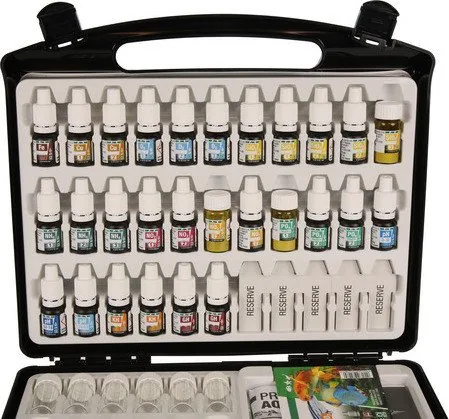
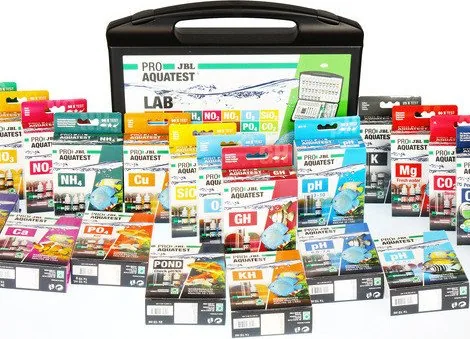
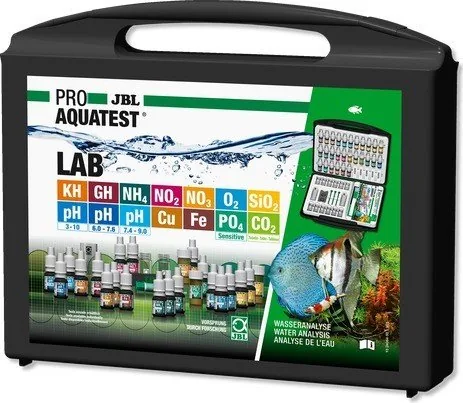
Test Apă (pH (3 Intervale), Duritate Carbonată, Duritate Totală, Fosfat, Nitrit, Nitrat, Fier, Cupru, Silicați, Oxigen, Ammoniu, Amoniac, CO2 Indirect), Set Test

Dimensiuni

38,20x8,51x31,80 cm (LxÎxAd)

Greutate

1,27 kg

M: QW-35-FL

Produs Descriere

Stăpânirea Chimiei Apei din Acvariu

Menținerea unui mediu acvatic sănătos necesită monitorizare precisă a chimiei apei pentru a asigura sănătatea tuturor organismelor care trăiesc în interior. Manualul JBL Pro AquaTest Lab Caz de Testare oferă ghiduri esențiale pentru pasionații care cer excelență în configurările lor acvatice pentru a menține condiții de top. Această colecție cuprinzătoare asigură că peștii și plantele dumneavoastră prosperă în condiții optime oferind instrucțiuni detaliate pentru diverse metode de analiză utilizate astăzi.

Metode Esențiale de Testare pentru Claritate

Calitatea apei determină succesul oricărei configurații acvatice indiferent de speciile specifice pe care le păstrați. Fie că păstrați viață acvatică de apă dulce sau crap Koi din iazul de grădină parametrii diferiți necesită atenție specifică pentru stabilitate. Manualul detaliază metodele de titrare și colorimetrice sofisticate proiectate pentru precizie și ușurință în folosire pentru toată lumea. Testele de titrare precum KH și GH folosesc numărătoarea precisă a picăturilor pentru a determina eficace nivelurile de duritate în timp. Testele colorimetrice precum pH și nutrienții esențiali se bazează pe hărți de culori pentru rezultate clare și lizibile pentru verificare rapidă. Fiecare test include proceduri pas cu pas pentru a minimiza eroarea utilizatorului în timpul procesului de testare a probelor de apă. Sistemul compensează eficace decolorarea apei cauzată de filtrarea cu turbă sau tratament asigurând fiabilitatea chiar și în condiții dificile.

Parametri Vitali Acoperiți pentru Sănătate

Înțelegerea profilului apei dumneavoastră este crucială pentru prevenirea fluctuațiilor periculoase care rănesc creaturile sensibile. Testele de duritate precum Pro AQUATEST GH and KH previn oscilațiile de pH periculoase care rănesc creaturile sensibile semnificativ. Nivelurile pH între intervale specifice se potrivesc diferitelor specii de la apă dulce acidă la bălți marine alcaline perfect. Testarea nutrienților monitorizează ciclurile complexe azotate precum Amoniu Nitrit și Nitrat pentru a urmări funcționarea sistemului cu precizie. Nivelurile de Fosfat și Silicat ajută la prevenirea florilor persistente de alge care pot sufoca bazinul și pot omorî peștele. Elementele în urme precum Fier și Cupru sunt vitale pentru creștere dar trebuie controlate strict pentru a evita riscurile de toxicitate. Nivelurile de oxigen asigură susținerea vieții pentru pești și bacterii în timp ce fertilizarea CO2 ajută la creșterea luxuriantă a plantelor în acvariile plantate.

Mentenanță și Corecții pentru Stabilitate

Menținerea parametrilor stabili evită stresul și izbucnirile de boală în ecosistemul dumneavoastră pe termen lung. Dacă valorile deviază de la intervalele recomandate ghidul oferă pași specifici de corecție pentru ajustare pentru a repara problemele. Duritate prea mică necesită adăugarea sării minerale în timp ce excesul sugerează folosirea filtrării osmozei inverse pentru a o reduce. Deficiențele de nutrienți necesită fertilizatori specifici din gama ProScape disponibile pentru cumpărare online ușor. Nivelurile ridicate de toxine necesită schimbări imediate de apă sau introducerea filtrelor biologice pentru a restabili echilibrul rapid. Instrucțiunile de depozitare asigură că reactivii rămân eficienți pentru perioadele viitoare de testare înainte de a expira. Picurătoarele trebuie ținute vertical pentru a evita bulele de aer în timpul administrării reactivilor. Monitorizarea regulată previne surprizele neașteptate în rutina dumneavoastră de mentenanță pentru bazinele dumneavoastră. Urmând îndrumările JBL Pro AquaTest Lab Caz de Testare Manual posesorii de acvarii pot obține limpezime și stabilitatea apei pentru animalele lor de companie.

M: QW-35-FL

© Copyright 2026 Manual.ly